

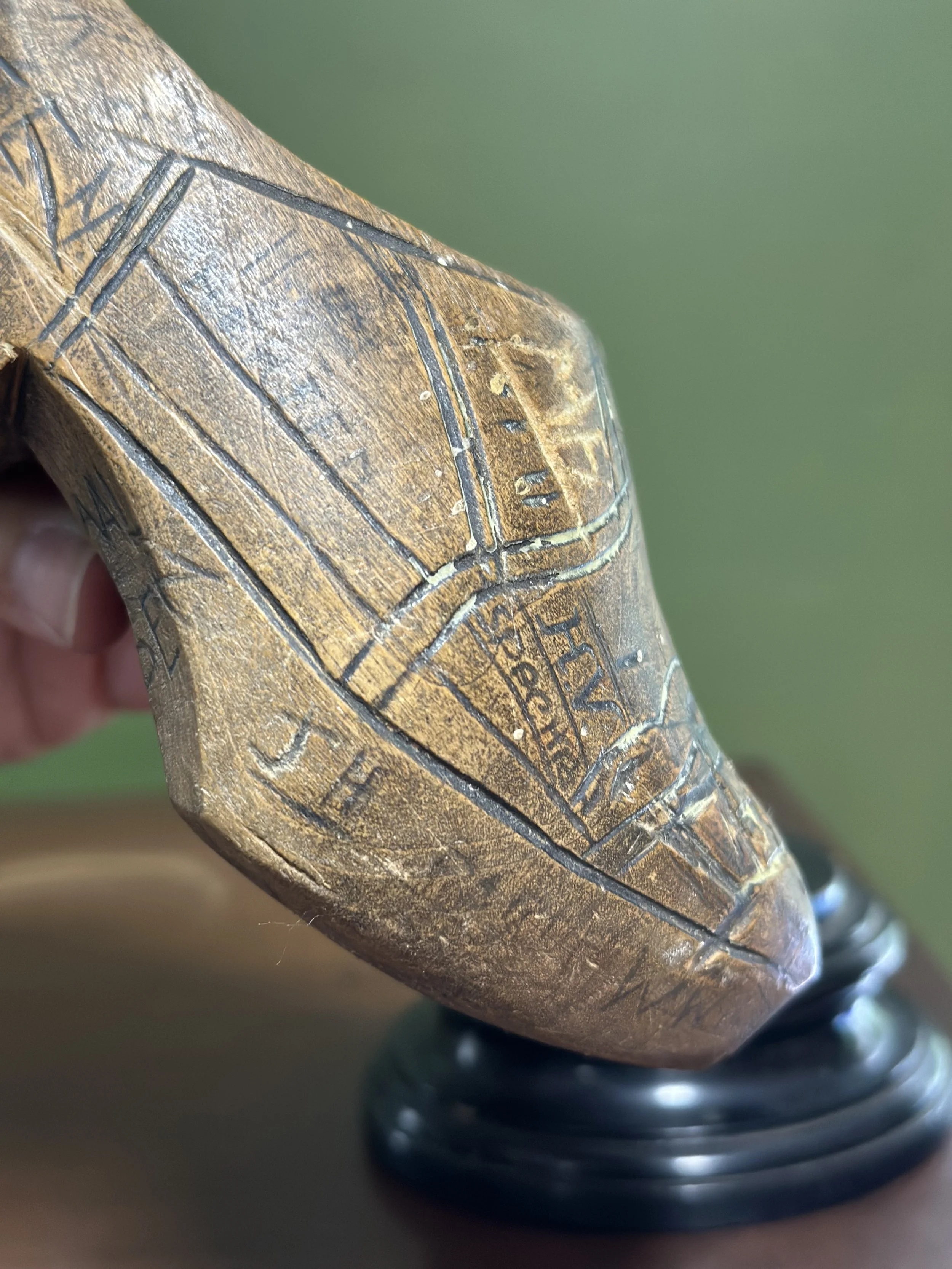
Rare WWII Dutch Resistance Zwervers Boy Scout POW Carved “Trench Art” Wood Clog
This small, crudely-carved clog came with a contemporary label handwritten in Dutch. The handwriting is not easy to ready, but after consulting with a native Dutch speaker, we believe it translates to ‘Clog from communal room Scouting “Zwervers” Oosterhoutstraat’, 1941.
Zwervers, the Dutch equivalent of the British Rover Scouts, was formed following a visit from Baden-Powell in 1911. There was and still is a Scout group located on Oosterhoutstraat in Assen, Netherlands.
Scouts and other youth groups were forbidden in Germany after Hitler came to power in 1933. They were instead forced to join the ‘Hitler Jugend’ (Hitler Youth). The ban soon came into place in Austria, Czechoslovakia and Poland.
Many Scout leaders were sent to concentration camps as their knowledge of landscapes, map reading and survival skills made them ideal candidates to join the resistance. Scout groups were particularly targeted as they were considered “an active instrument of the British cultural and political propaganda” and therefore a threat to German nationality.
Scouting activity in the Netherlands managed to continue without restriction for longer than expected, but all Scouting activity was forbidden from the 9th of April in 1941. Dutch Scout leaders were interrogated, archives were destroyed and troop houses were closed down or taken over by the National Youth Storm. Some Scout groups had foreseen this takeover and hidden a lot of material well in advance. A number of groups went underground and held secret meetings, which is why many were revitalised almost immediately after the end of the war.
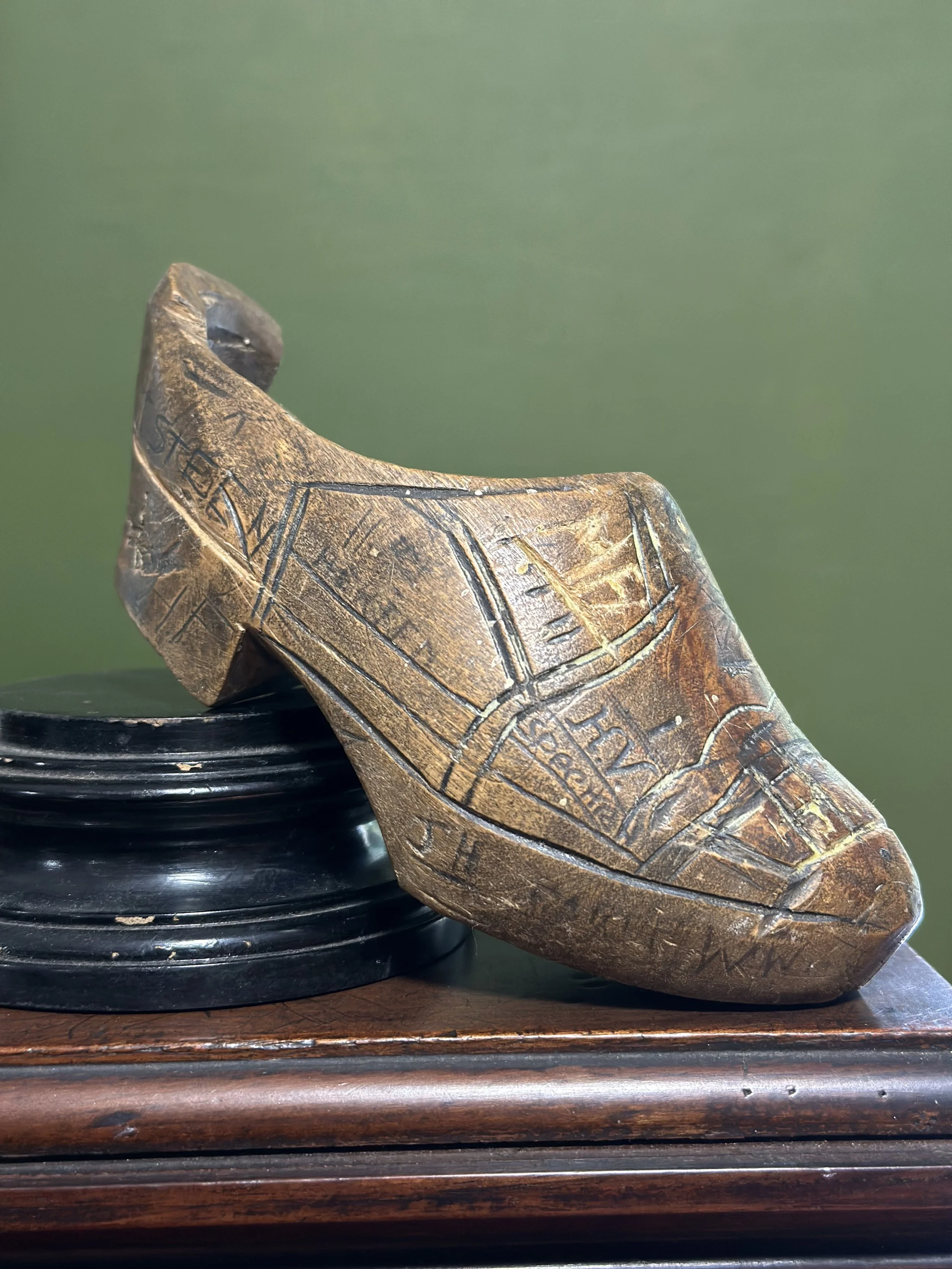
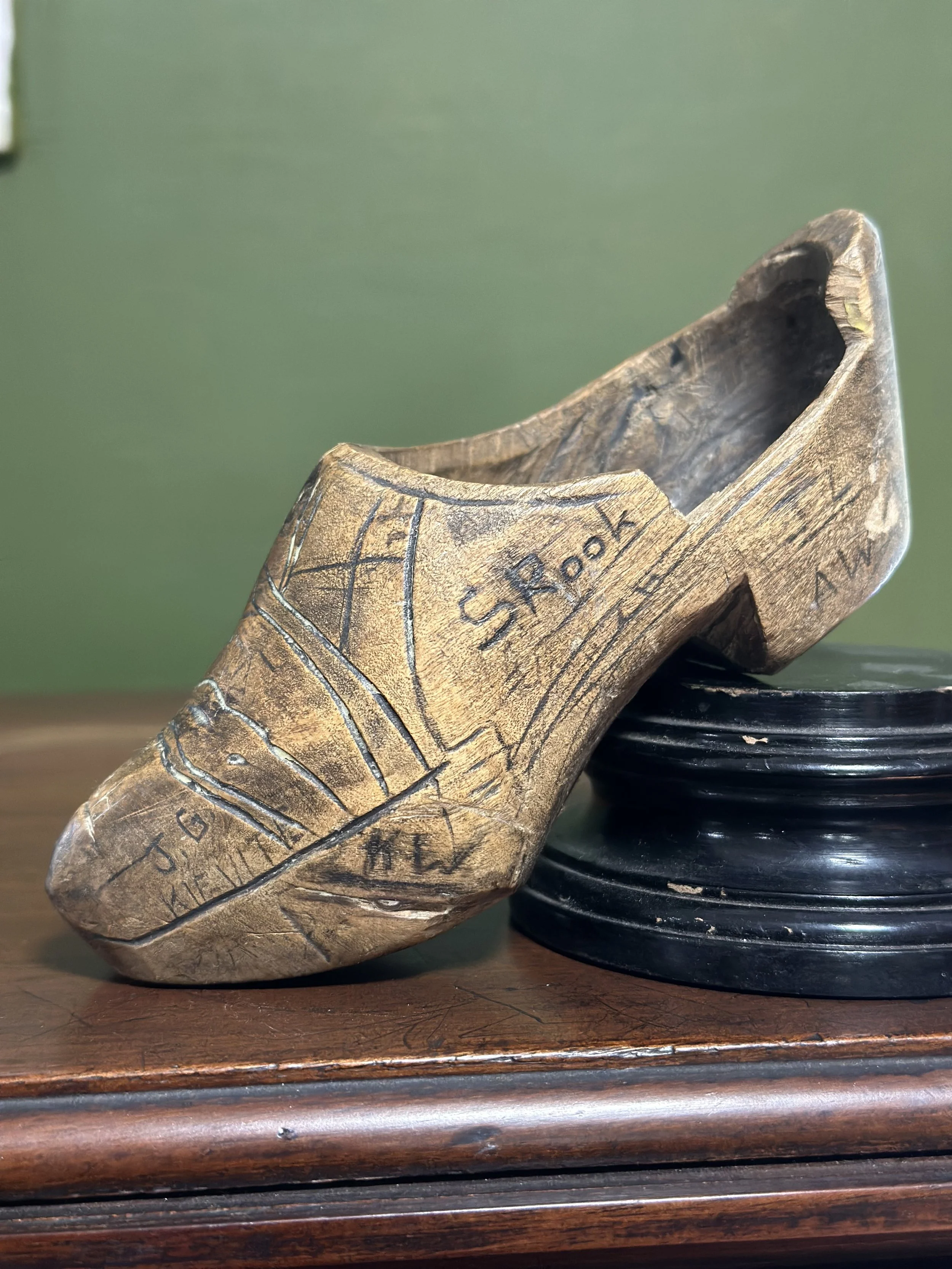
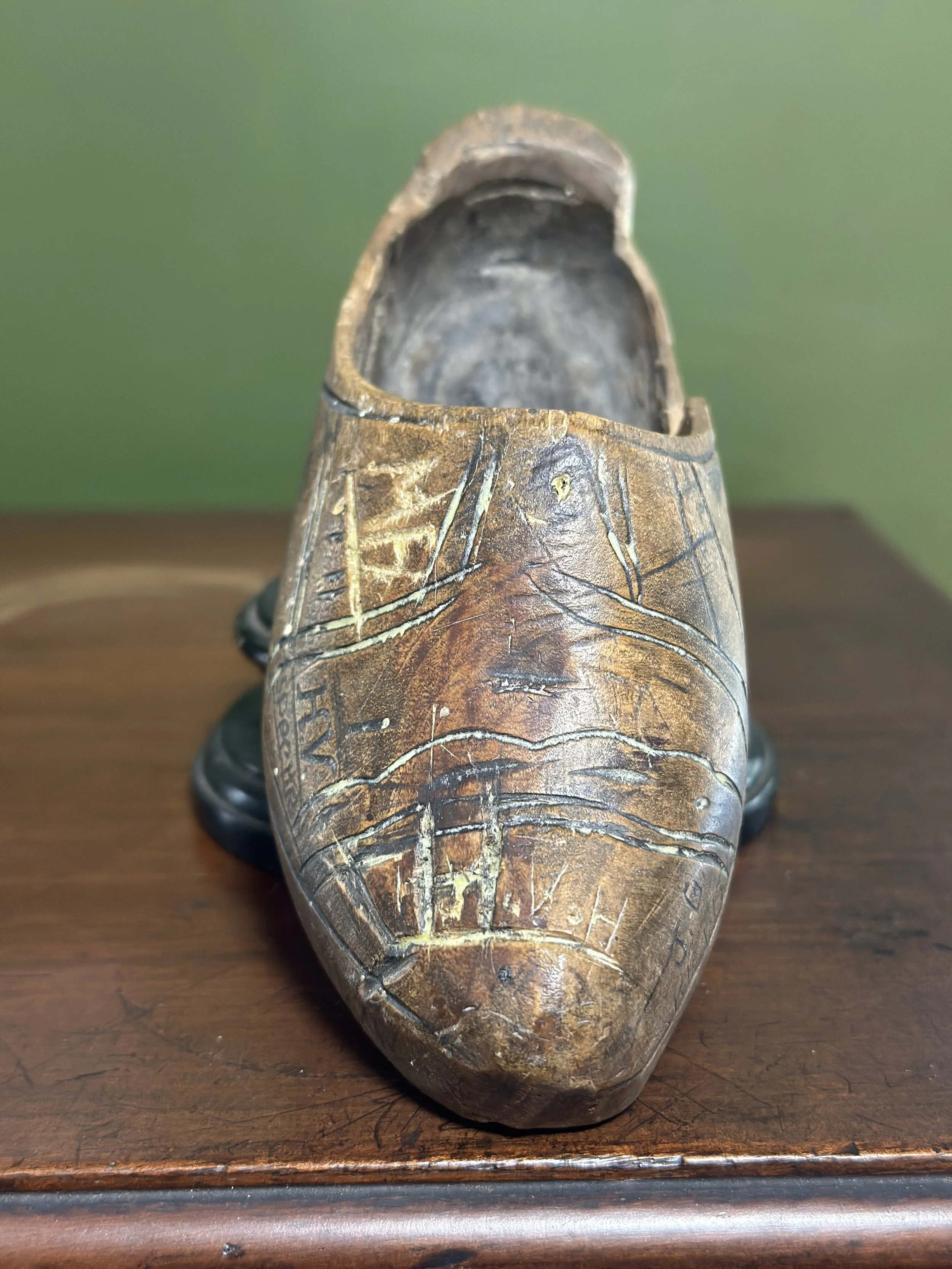
The clog is undoubtedly a symbol of Dutch identity and history. Whittling the form of a clog from a lump of wood whilst your country is under occupation and your national identity is being squashed must have brought a little comfort. This small act of defiance was then shared with others, as can be seen in the many different styles of carved writing on the exterior of the clog.
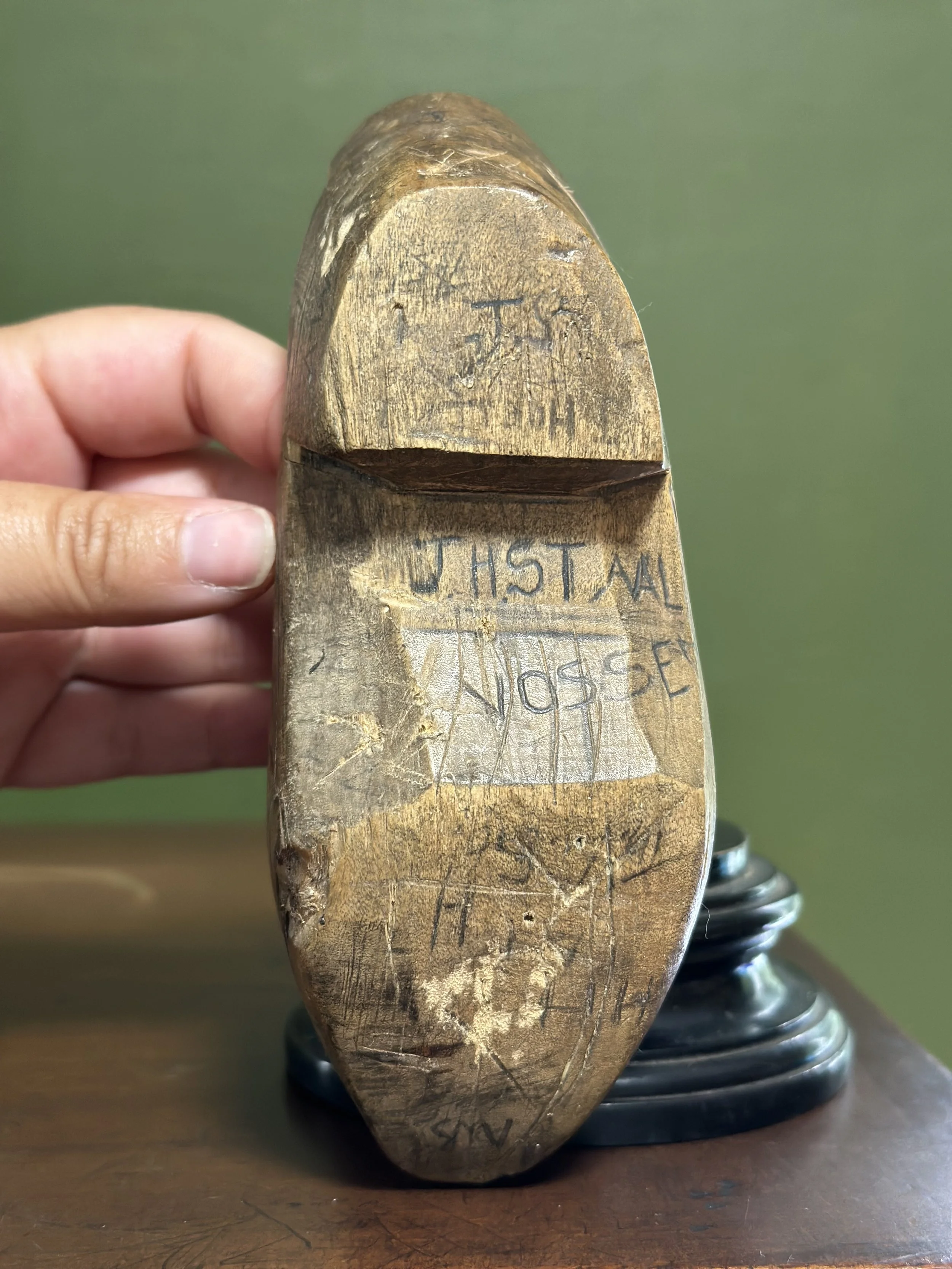
The carvings include many initials, some names and what are possibly at least two prisoner of war camp locations. On the sole is the word Nossen, the outer line of the N is faint so it may look like ‘Vossen’ in some lights. Above the word Nossen is ‘Staal’, the Dutch word for steel, though it could also be a surname. Nossen was a Subcamp or Satellite camp for the Flossenbürg Concentration camp. At Nossen, prisoners were initially housed in the basement of the Klostermühle. Conditions were harsh and they were made to perform heavy construction and manufacture of shell cases and similar- this is possibly what the word steel is referencing on the clog, though it’s more likely to be a name.
Scratched onto the side of the clog is the word Herten, a town and municipality in Germany where several forced labour camps were based. Other words are less defined and not easy to read, but would undoubtedly reveal more of a story behind this highly unusual and rare WW2 keepsake. A lovely piece of Dutch history.
The clog has a small piece missing, the break is browned and worn smooth, so it likely happened when the clog was being carved, or soon after.
Length from toe to heel measures 16cm.
This small, crudely-carved clog came with a contemporary label handwritten in Dutch. The handwriting is not easy to ready, but after consulting with a native Dutch speaker, we believe it translates to ‘Clog from communal room Scouting “Zwervers” Oosterhoutstraat’, 1941.
Zwervers, the Dutch equivalent of the British Rover Scouts, was formed following a visit from Baden-Powell in 1911. There was and still is a Scout group located on Oosterhoutstraat in Assen, Netherlands.
Scouts and other youth groups were forbidden in Germany after Hitler came to power in 1933. They were instead forced to join the ‘Hitler Jugend’ (Hitler Youth). The ban soon came into place in Austria, Czechoslovakia and Poland.
Many Scout leaders were sent to concentration camps as their knowledge of landscapes, map reading and survival skills made them ideal candidates to join the resistance. Scout groups were particularly targeted as they were considered “an active instrument of the British cultural and political propaganda” and therefore a threat to German nationality.
Scouting activity in the Netherlands managed to continue without restriction for longer than expected, but all Scouting activity was forbidden from the 9th of April in 1941. Dutch Scout leaders were interrogated, archives were destroyed and troop houses were closed down or taken over by the National Youth Storm. Some Scout groups had foreseen this takeover and hidden a lot of material well in advance. A number of groups went underground and held secret meetings, which is why many were revitalised almost immediately after the end of the war.
The clog is undoubtedly a symbol of Dutch identity and history. Whittling the form of a clog from a lump of wood whilst your country is under occupation and your national identity is being squashed must have brought a little comfort. This small act of defiance was then shared with others, as can be seen in the many different styles of carved writing on the exterior of the clog.
The carvings include many initials, some names and what are possibly at least two prisoner of war camp locations. On the sole is the word Nossen, the outer line of the N is faint so it may look like ‘Vossen’ in some lights. Above the word Nossen is ‘Staal’, the Dutch word for steel, though it could also be a surname. Nossen was a Subcamp or Satellite camp for the Flossenbürg Concentration camp. At Nossen, prisoners were initially housed in the basement of the Klostermühle. Conditions were harsh and they were made to perform heavy construction and manufacture of shell cases and similar- this is possibly what the word steel is referencing on the clog, though it’s more likely to be a name.
Scratched onto the side of the clog is the word Herten, a town and municipality in Germany where several forced labour camps were based. Other words are less defined and not easy to read, but would undoubtedly reveal more of a story behind this highly unusual and rare WW2 keepsake. A lovely piece of Dutch history.
The clog has a small piece missing, the break is browned and worn smooth, so it likely happened when the clog was being carved, or soon after.
Length from toe to heel measures 16cm.