

The design of these carved oak chairs was originally created as an act of support for Charles I and his son, the future Charles II following the English Civil War and the execution of Charles I.
Yorkshire was deeply involved in the Civil War, which is widely regarded as having started in 1642, when Charles I left London and set up his standard in the North. In the following years numerous battles and sieges took place in various Yorkshire towns and cities.
One of the King’s leading figures was Thomas Wentworth of Wentworth Woodhouse in South Yorkshire. Wentworth was one of the richest men in England and had a large following and influence amongst the gentry in Sheffield and surrounding areas. This is likely why the origin of these chairs are routed in South Yorkshire and it’s neighbouring county of Derbyshire.
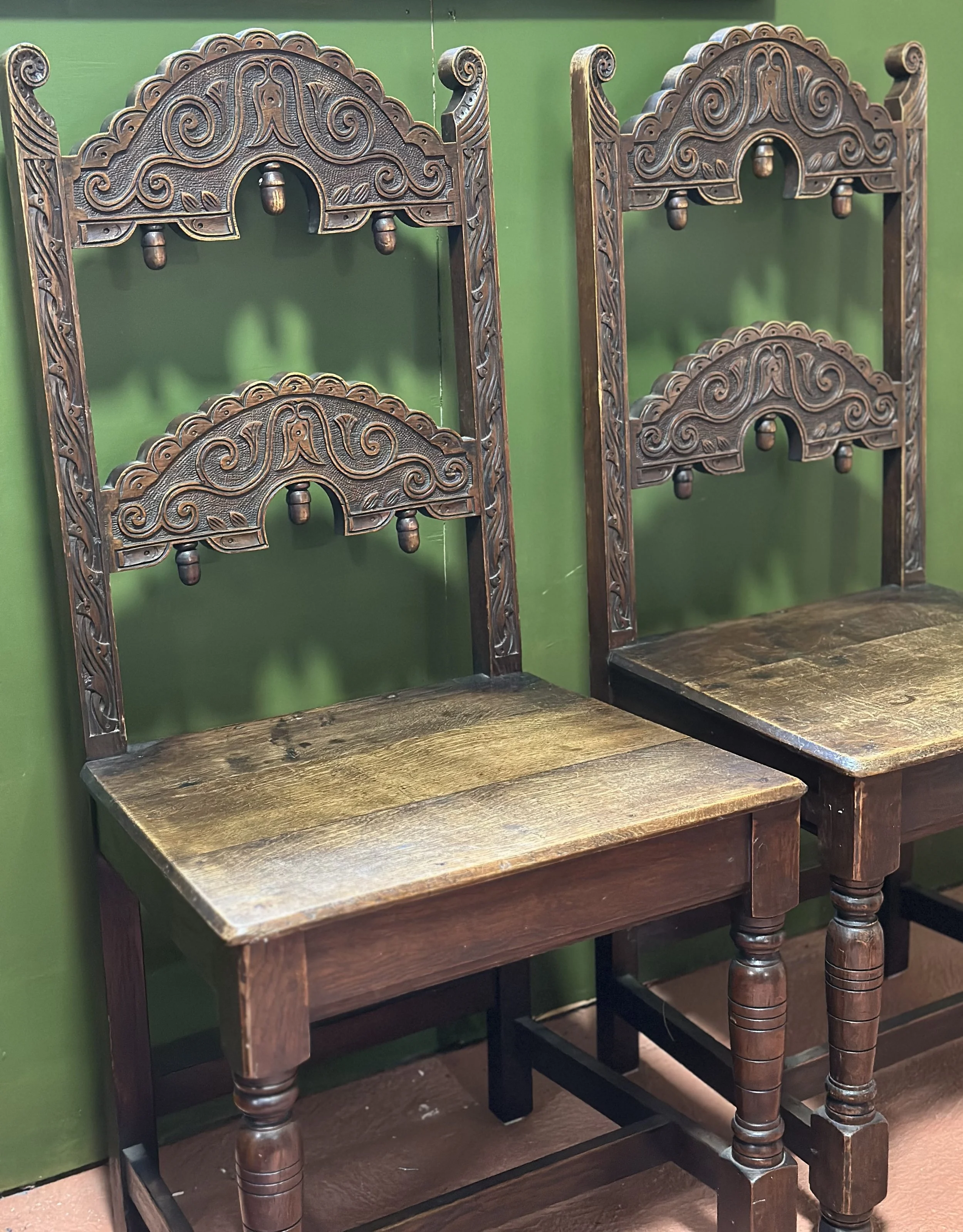
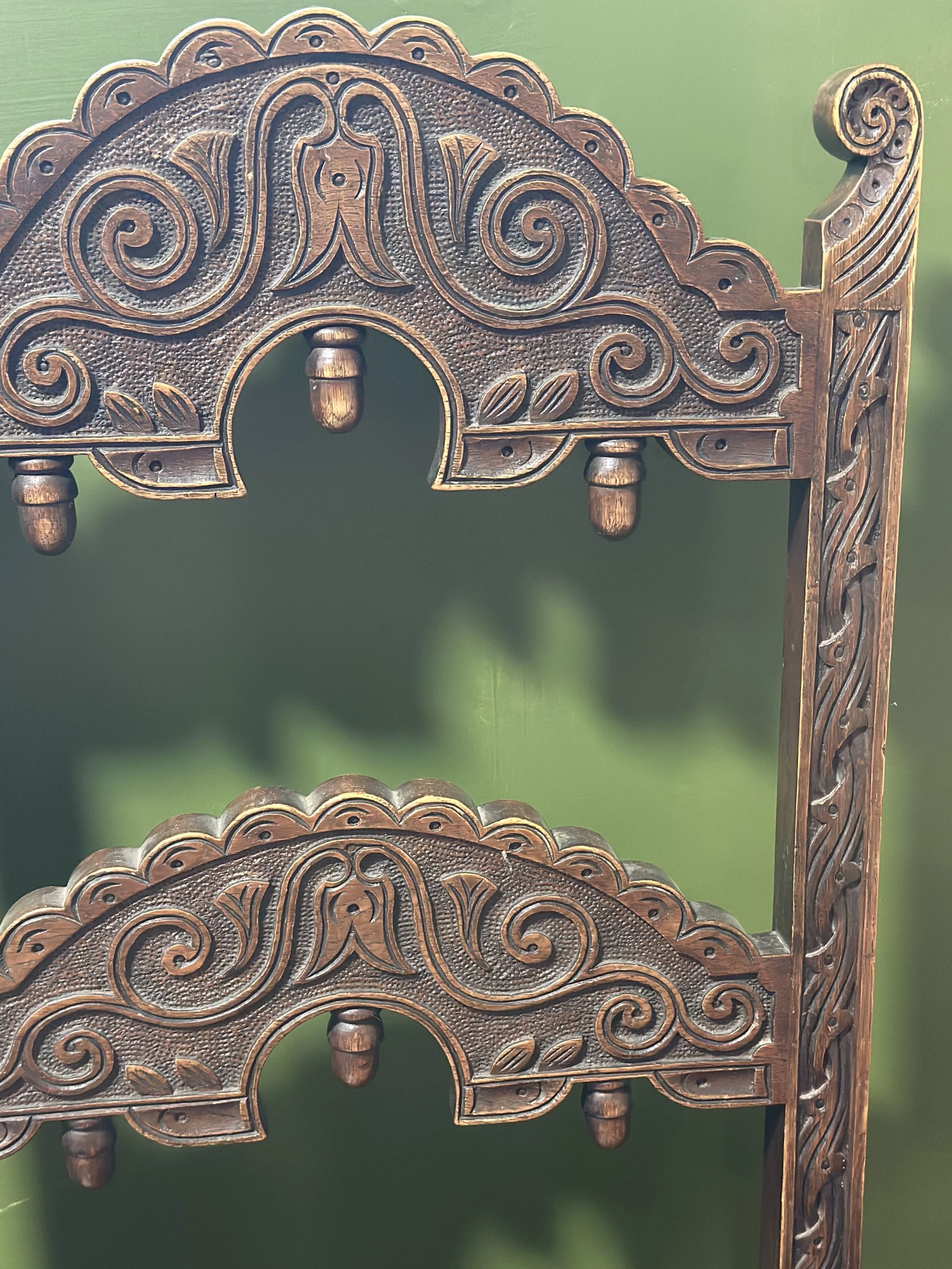
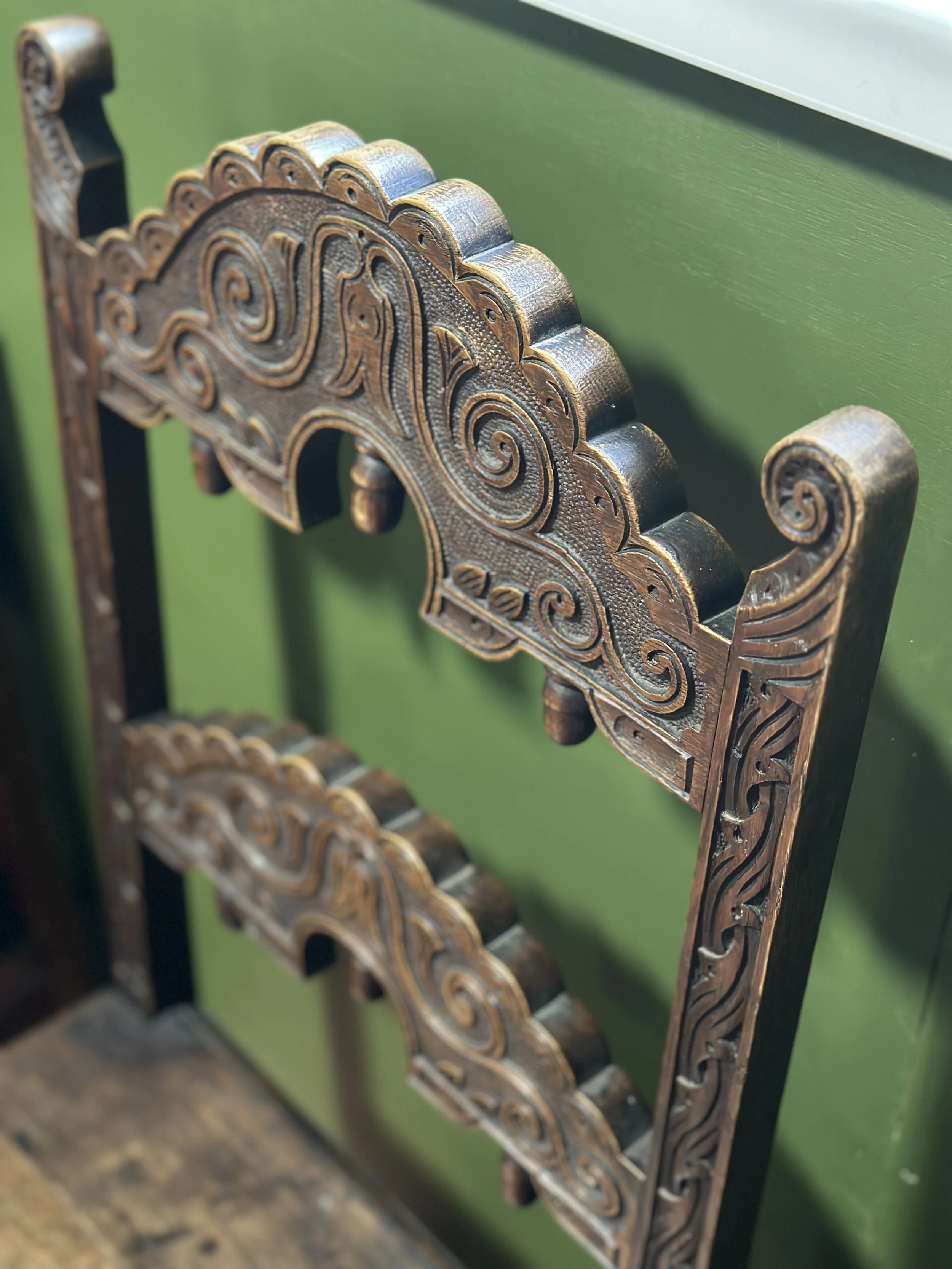
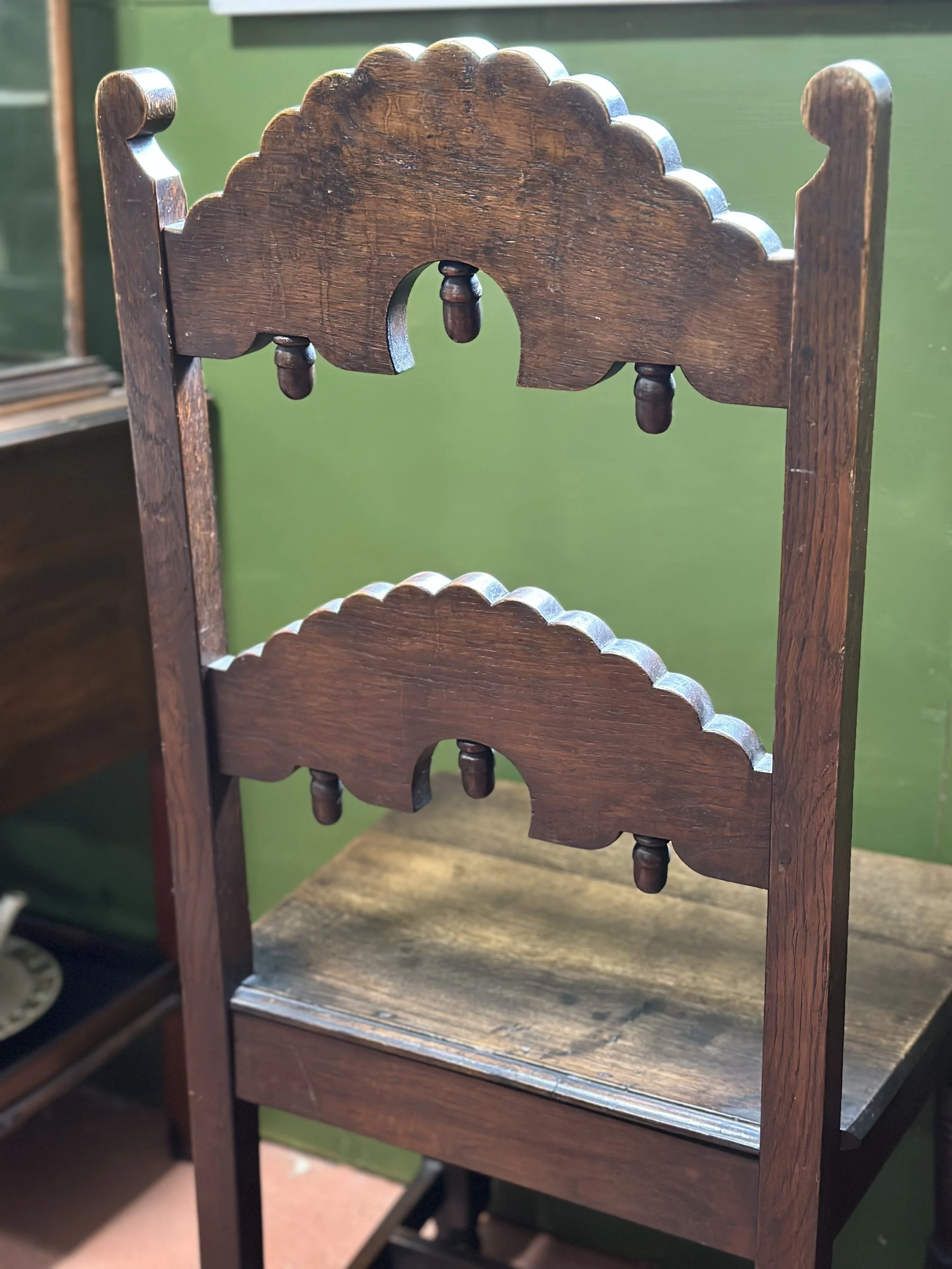
The round back with scalloped edge is said to symbolise Charles I’s head and the waves in his hair. Though we suspect it’s a closer representation of Charles II’s infamously ornate head of wavy hair. The acorns are in reference to the oak tree the future Charles II hid in whilst escaping from Parliamentarian soldiers led by Oliver Cromwell in 1651.
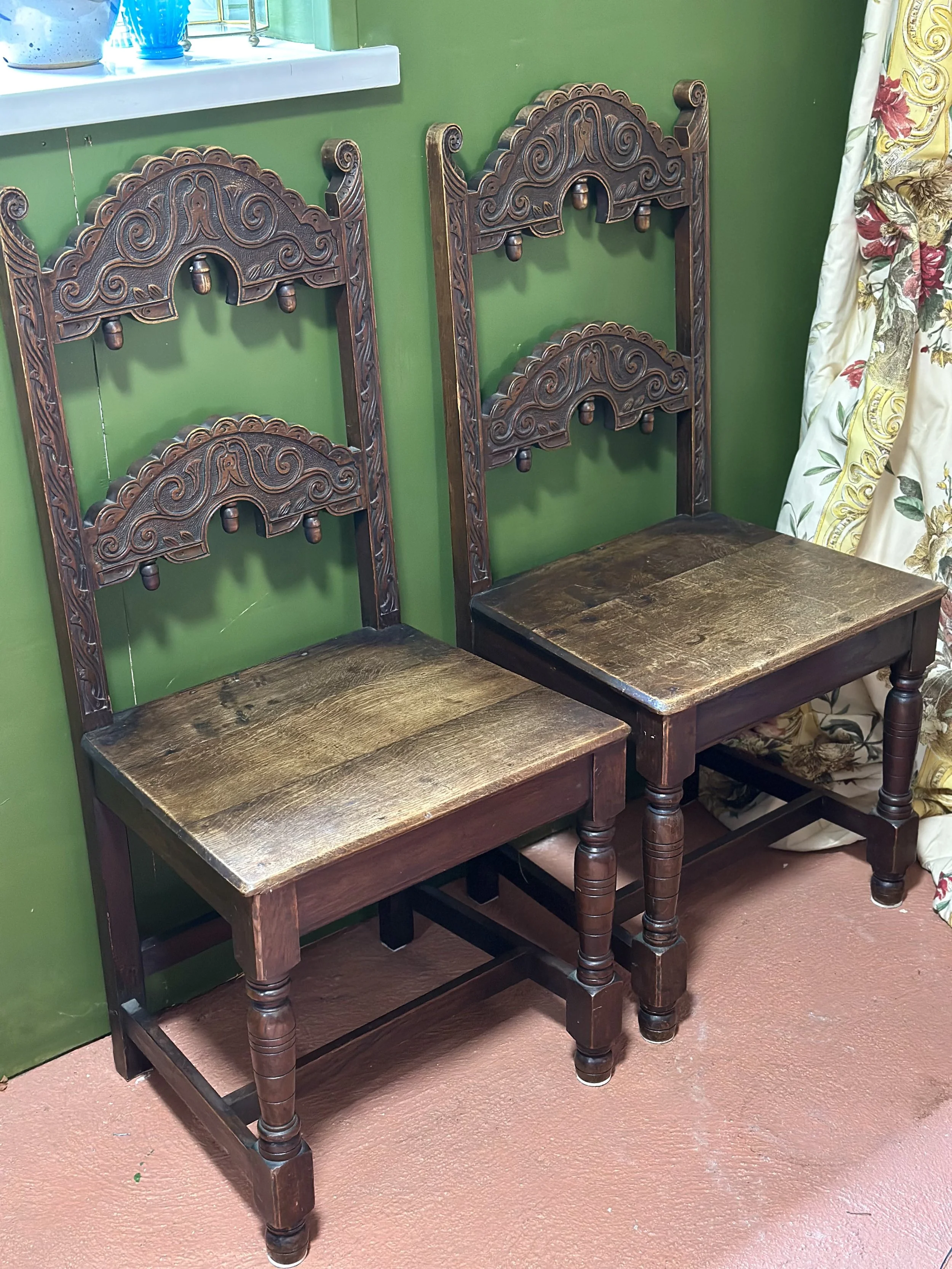
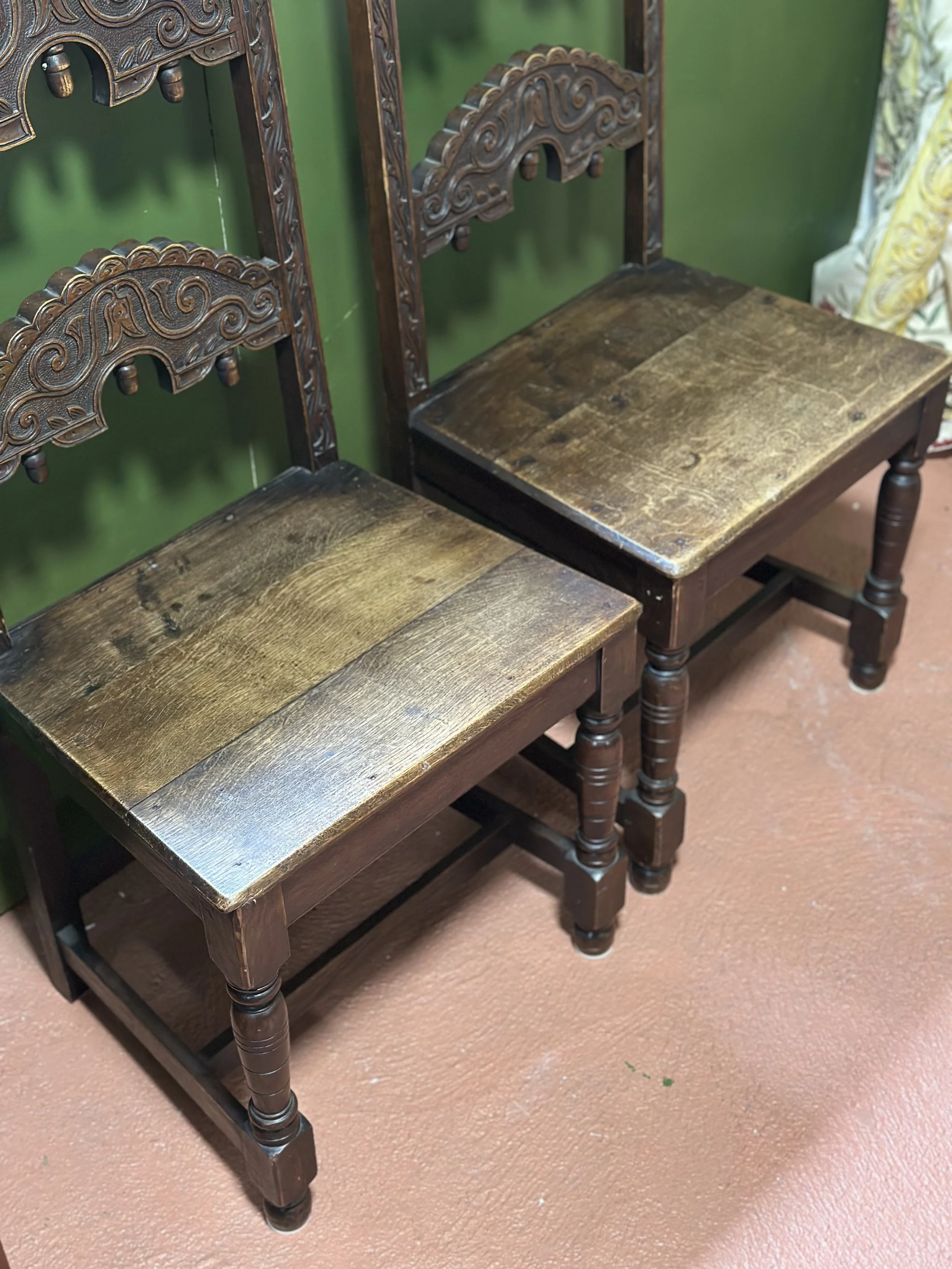
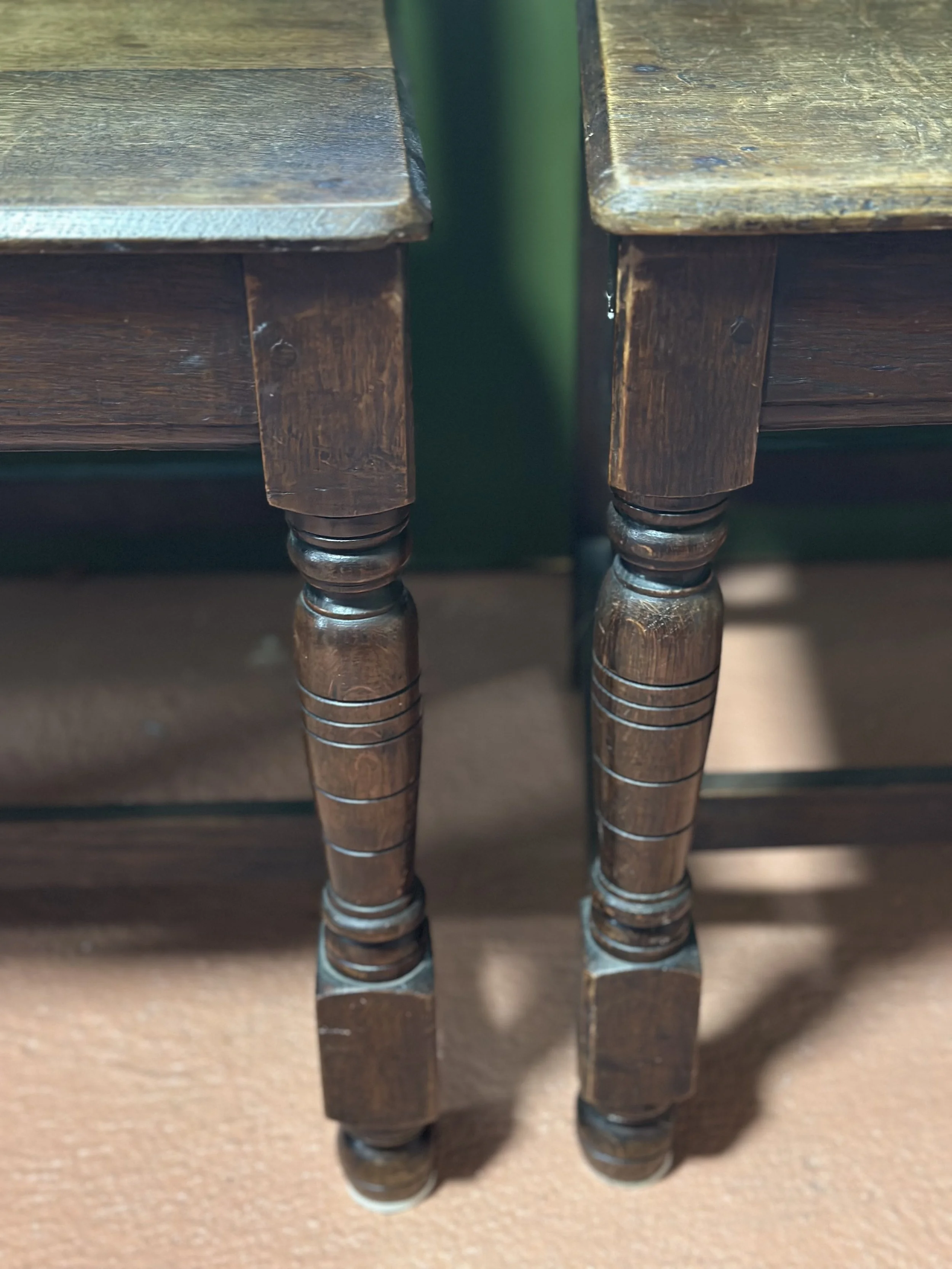
This matching pair of oak chairs are a later example from the 19th century, though the legs are slightly more in line with 19th century design, the back is an exact replica of the 17th century design. They’re well made and solid in form with a great patina.
Height of back 99cm
Height of seat 46cm
Width of seat 48cm
Depth 39cm
The design of these carved oak chairs was originally created as an act of support for Charles I and his son, the future Charles II following the English Civil War and the execution of Charles I.
Yorkshire was deeply involved in the Civil War, which is widely regarded as having started in 1642, when Charles I left London and set up his standard in the North. In the following years numerous battles and sieges took place in various Yorkshire towns and cities.
One of the King’s leading figures was Thomas Wentworth of Wentworth Woodhouse in South Yorkshire. Wentworth was one of the richest men in England and had a large following and influence amongst the gentry in Sheffield and surrounding areas. This is likely why the origin of these chairs are routed in South Yorkshire and it’s neighbouring county of Derbyshire.
The round back with scalloped edge is said to symbolise Charles I’s head and the waves in his hair. Though we suspect it’s a closer representation of Charles II’s infamously ornate head of wavy hair. The acorns are in reference to the oak tree the future Charles II hid in whilst escaping from Parliamentarian soldiers led by Oliver Cromwell in 1651.
This matching pair of oak chairs are a later example from the 19th century, though the legs are slightly more in line with 19th century design, the back is an exact replica of the 17th century design. They’re well made and solid in form with a great patina.
Height of back 99cm
Height of seat 46cm
Width of seat 48cm
Depth 39cm